
Engaging Communities in a Culture of Health
Building a culture of health in our communities requires partnering with grassroots organizations, local government, police, the faith-based community, businesses, schools and residents.
Mass General gives backbone support to four multi-sector coalitions—The Charlestown Coalition, EASTIE, Healthy Chelsea and Revere CARES—providing staff, resources, evaluation services and communications assistance to tackle health challenges such as substance use, obesity, food insecurity and trauma.
Charlestown
Charlestown is the oldest neighborhood in the City of Boston. It is the second smallest of Boston's neighborhoods, occupying only 1.4 square miles with a population of 18,901. Charlestown is a widely varied community, home to some of the city's elite, but with a struggling middle class attempting to recover from the recent recession and the largest concentration of public housing residents in New England.
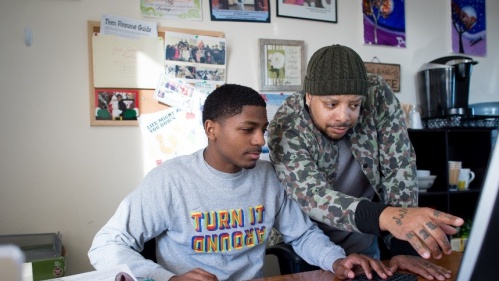
The number of people of color in Charlestown has grown dramatically over the years and is now nearly a quarter of the population, up from five percent in 1990. A growing affluent population has been drawn to Charlestown because of the proximity to downtown, renovated brownstones, and panoramic views of the harbor. And, this recent movement has largely contributed to the stark income disparities.
The Charlestown Coalition (formerly the Charlestown Substance Abuse Coalition) was formed in 2004 by residents and community partners in response to the devastating opioid epidemic and overdose related deaths among young people. As the coalition adapts to meet the changing needs of the community, the work has expanded to go beyond substance use and focus additionally on stable housing, healthy food, racial equity, and access to mental health services. For more information, visit www.charlestowncoalition.org.
Chelsea
Chelsea is a densely populated community located two miles north of Boston and has long been a gateway city for immigrants from Central America and refugees fleeing countries devastated by war and poverty. Nearly half of Chelsea residents are foreign born, and over 68% speak a language other than English at home. Over 62% of residents (up from 28% in 2000) and 85% of public school students are Latino, and 30% of Chelsea public school students are new immigrants from 24 countries.
Chelsea is one of the poorest communities in Massachusetts, and more than 24% of the population lives below the Federal Poverty Level, more than twice the 10.5% rate statewide. Fifty percent of Chelsea's public school students are from low-income families, almost twice the state rate of 27%, and Chelsea High's graduation rate in 2017 was just 60%, well below the state rate of 87.3%.
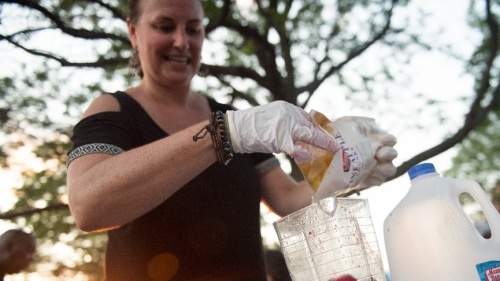
Healthy Chelsea was launched in 2010 as the result of a comprehensive Community Health Needs Assessment (CHNA) done by the Mass General Center for Community Health Improvement (CCHI) in partnership with Chelsea city officials. At the time, obesity was identified as the city’s top health concern. Programs focusing on healthy eating and active living were developed, and early successes included a citywide ban of trans fat, the elimination of juice in all Chelsea public schools and improvement in the design and safety of local parks.
In 2012, the Healthy Chelsea Coalition voted to expand its focus as residents and community partners identified substance use and its effects, including perceptions of violence and public safety, as the city’s top health concern. Community members emphasized the need for education and prevention strategies geared toward youth and families to improve overall health and safety. For more information, visit www.healthychelsea.org.
Revere
A coastal city located five miles north of Boston, Revere is a rapidly changing community of roughly 53,000 residents. Once made up of primarily Italian-American families, approximately 58% of Revere residents are white, 28% are Latino (up from 9.4% in 2000), 6% are Asian, 5% are black and 3% are multi-racial/other, and more than 36% of those living in Revere are foreign-born. Poverty is a significant issue, as 13% of the population lives in poverty, with 19% of children under 6 years of age living in poverty.
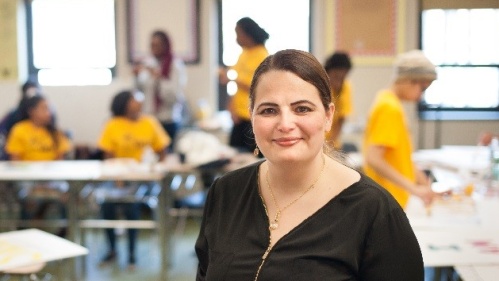
Partnering with CCHI in the 1990s, Revere mobilized to tackle some of the community’s biggest challenges when the Revere CARES coalition successfully reduced youth substance abuse rates and worked to change community norms around youth substance use. The Coalition was recognized in 2009 with the Coalition of the Year Award from the national Community Anti-Drug Coalitions of America.
In 2011 and 2012, Revere identified substance use and obesity/healthy living as top community health concerns through community health needs assessments. They also identified developing the assets of youth as a priority.
In 2018, the coalition celebrated its 20th anniversary with renewed energy and focus. Through a series of community meetings, financial mobility and employment opportunities were identified as additional priorities for the coalition, expanding their existing programming.
Learn More About the Center for Community Health Improvement
CCHI brings together people and resources to address challenging health problems and foster sustainable improvement.