

Pediatric Critical Care Medicine Fellowship
Mass General Brigham for Children Critical Care Medicine Fellowship Program
CPZS-5
175 Cambridge Street
Boston,
MA
02114
Phone: 617-724-4380
Fax: 617-724-4391
Explore This Fellowship Program
Overview
Thank you for your interest in the Pediatric Critical Care Medicine (PCCM) fellowship at Mass General Brigham for Children/Harvard Medical School. The primary objective of the fellowship program is to provide fellows with a learning environment that will enable them to become expert practitioners and leaders in the field of Pediatric Critical Care Medicine. The fellowship faculty work closely with each fellow throughout their three years of training to tailor their experience to meet individual career aspirations. In the past this has included the design of ABP-approved dual subspecialty training in PCCM and other pediatric subspecialties, including emergency medicine and pulmonology.
The program is configured to support seven clinical fellows following the track toward certification by the sub-board of Pediatric Critical Care of the American Board of Pediatrics. The program is accredited by the Accreditation Council for Graduate Medical Education (ACGME).
The goals of the program are four-fold:
1) To provide fellows with an understanding of the pathophysiology of life-threatening disease and injury, and the cognitive and technical skills necessary to independently diagnose and manage critically ill infants, children and adolescents.
2) To foster an environment of intellectual curiosity, advance the fellows’ knowledge of the basic principles of research and mentor each fellow in the pursuit of scholarly activity related to pediatric critical care.
3) To enable fellows to become effective educators in pediatric critical care medicine.
4) To help the fellows become efficient administrators, through supervised acquisition of experience in management and problem-solving in a multidisciplinary pediatric intensive care unit.
Our Fellows
Third Year Fellows
Brendan Barry, MD
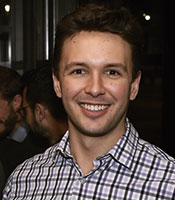 Hometown: North Hampton, NH
Undergraduate: Columbia University
Medical School: Warren Alpert Medical School of Brown University
Residency: Yale New Haven Children’s Hospital
Current City: Boston, MA
I wanted a program that would give me the support necessary to confidently tackle new and uncomfortable situations throughout my training. This was clearly an excellent, warm, and supportive group of intensivists who are dedicated to our professional and individual growth as fellows. I am also a New Englander at heart and my hometown in coastal New Hampshire is only a short drive away.
Lisa Bartucca, MD
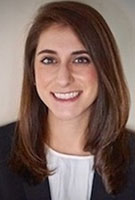 Hometown: Norwood, MA
Undergraduate: Northeastern University
Medical School: Tufts University School of Medicine
Residency: New York Presbyterian Weill Cornell Medicine
Current City: Boston, MA
After a few years living in NYC (and being one of the only people wearing a Red Sox hat), I am so excited to be coming back home to Boston and joining the Mass General Brigham for Children family! On my interview day, I could just tell that the faculty were so supportive and invested in the fellows education and growth. The program had all the elements I was looking for including strong clinical experience and autonomy with dedication to learning and research all with a "close knit family" feel. In my free time, I love trying new Boston restaurants with my husband, spending time with family/friends, cycling on my Peloton, traveling, and binge-watching TV shows.
Second Year Fellows
Sravya Gourishetti, DO
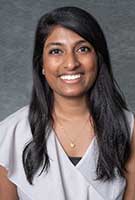 Hometown: Boxborough, MA
Undergraduate: University of Illinois at Urbana-Champaign
Medical School: Campbell University School of Osteopathic Medicine
Residency: University of Connecticut/Connecticut Children’s Medical Center
Currently Living: Boston, MA
Having grown up in Massachusetts, it has always been a dream of mine to come back to work and live in and around Boston. Although my education has taken me to various parts of the country, I was so excited to have found a perfect fit for me for PICU fellowship at Mass General Brigham for Children. Having been taught, trained, and inspired by several Mass General Brigham for Children alums, it was clear that the supportive environment, dedication to evidence-based practice, and abundant research opportunities at Mass General Brigham for Children trains amazing intensivists. I am excited to start my journey as an intensivist at Mass General Brigham for Children! Outside of work, I enjoy rooting for all the Boston sports teams (especially the Celtics!), painting, cooking, and spending time outside with my family and friends!
Adam Delong, MD
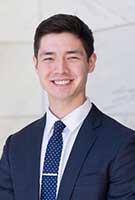 As a born and raised Midwesterner, I'm excited to continue my training in the Northeast at Mass General Brigham for Children I was really impressed on my Mass General Brigham for Children interview day by the balance of clinical experiences and academic opportunities of a huge institution like MGH and the "family" feel of a smaller unit. When I'm not in the hospital, you might find me cycling, playing board games, or looking for new restaurants to try.
Candace Callender, DO
 Hometown: Washingtonville, NY
Undergraduate: The University of Scranton
Medical School: Philadelphia College of Osteopathic Medicine
Residency: HMH K.Hovnanian Children’s Hospital
Currently Living: Somerville, MA
As someone born and raised in New York State, I was looking for a program that was close to my home and my loved ones, and I found that at the Mass General Brigham for Children program. I’ve been told wonderful things about the PICU fellowship and the close-knit community at Mass General Brigham for Children from mentors and it was apparent on my interview day. I am excited to meet everyone in person. In my free time you can find me out exploring the city, trying new restaurants, or catching a show.
First Year Fellows
Sidney Rehn, MD
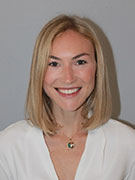 Hometown: Stockholm, Sweden
Undergraduate: Karolinska Institutet, Sweden
Medical School: Karolinska Institutet, Sweden
Residency: Mass General for Children
Currently Living: Boston, MA
MGBfC and Me: I had the pleasure of training at MGfC during my residency and am so excited to now stay on as a critical care fellow - I couldn't feel luckier than to be a part of this exceptional group of people! I am looking forward to continue learning from the passionate, supportive & intellectually curious PICU teams, grow in my role as a teacher to residents and medical students, and continue enjoying life in New England with my family and new co-fellow friends! Although my husband and I moved from Stockholm, Boston has quickly become a home to us, especially after the birth of our son. In my free time I enjoy spending time with my husband & son, cooking, baking, hiking, play tennis, and reading.
Meghna SivaKumar, MD
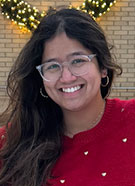 Hometown: Singapore
Medical School: Kasturba Medical College, Manipal, India
Residency: Marshfield Clinic, WI
Currently Living: Boston, MA
MGBfC and Me: I had heard wonderful things about the program from someone who had trained at MGB. Several things stood out to me and were proven true within just a few weeks of starting training - the "family" feel of a smaller unit, friendly intensivists who greet you with hugs when offered handshakes, and of course, the exceptional training. I'm new to Boston and the East Coast and am looking forward to everything it has to offer!
Educational Curriculum
Conferences
In addition to bedside teaching and daily case-based discussions on work rounds, the fellows attend weekly didactic teaching conferences covering a wide array of topics, including basic pathophysiology and management of critical care illness and disease, biostatistics, innovative therapies and more.
Fellow’s Lecture Series: Dedicated fellow lectures are held weekly throughout the academic year and are taught by PICU faculty. They include introductory topics such as respiratory physiology and mechanical ventilation, and progress to cover topic areas highlighted by the American Board of Pediatrics for critical care medicine.
Division Conference: Pediatric critical care lectures are held weekly for the entire division and are presented by a variety of MGH faculty, as well as visiting lecturers.
Morbidity and Mortality Conference: M&M conference is held monthly and presented by the prior month’s on-service fellows. These conferences focus on reviewing all morbidities and mortalities from the prior month for the purpose of identifying opportunities for improvement and sharing lessons learned.
Journal Club: With faculty mentorship, fellows are expected to prepare journal club presentations on a variety of topics with a variety of study designs. The purpose of journal club is two-fold: 1) it is an opportunity for fellows to learn how to critically read papers and to learn about study design and statistics; and 2) it is an opportunity to review sentinel papers that drive our practice and analyze more recent studies that inform our future practice.
Case Conference: This interdisciplinary conference is presented by a PICU fellow and typically reviews a recent complex case. The conference is attended by invited subspecialists and the entire PICU care team in order to learn and discuss cases which involved many integrated decisions and multiple teams.
Faculty Rounds: Presented monthly by the on-service PICU fellow, this conference aims to discuss the highlights of difficult or interesting cases currently in the unit, with discussion and input from other PICU attendings.
Neurocritical Care Conference: Held monthly, this conference is a collaboration of neurology, neurocritical care, trauma, and neurosurgery. Topics include recent case presentations, literature reviews, and current topics in the field.
Fellows also participate in a monthly Collaborative Practice Meeting, a multidisciplinary conference focused on quality improvement efforts in the PICU.
Beyond these division-specific conferences, fellows are encouraged to take advantage of the many other didactic conferences offered by Mass General Brigham for Children, including Pediatric Grand Rounds, Trauma Conference, Pediatric ECMO conference, Pediatric Transport Conference, Pediatric Ethics Committee meetings and lecture series, and Adult Critical Care/Anesthesia/Pulmonary Conferences.
Simulation
Fellows are taught monthly in difficult clinical scenarios with the aid of medical simulation. Utilizing two life-like simulation mannequins, fellows are taught together to work through difficult clinical scenarios in real-time. Simulations are also held in the unit together with residents, nursing, and respiratory therapy. Fellows have the opportunity to design clinical cases and run and de-brief simulations within the unit. Fellows also have the opportunity to assist with simulation exercises held at outside hospitals designed for pediatric hospitalists and other sub-specialties.
Transport
The PICU at Mass General Brigham for Children located at Massachusetts General Hospital provides an active critical care transport service for local and regional hospitals throughout New England. All transport calls are fielded by the PICU fellow by telephone or, in some cases, via telemedicine link between the PICU and the outlying hospital. The PICU fellow is required to assess the level of acuity of the patient and to identify the patient’s immediate and transport needs. They are expected to provide management advice to the referring physician, determine and coordinate the best mode of transport, and provide ongoing consultation with the transporting team en route to the PICU. All of this is done with supervision by a member of the PICU faculty.
Clinical Experience
Clinical training occurs primarily at the Massachusetts General Hospital Pediatric Intensive Care Unit, a 14-bed medical/surgical unit located on Bigelow 6. The PICU fellow works closely with the on-service attending physician and is given graduated responsibility in their management of the service. The philosophy of the PICU faculty is that responsibility should increase commensurate with the increase in knowledge and skills that are gained over the three-year fellowship.
Additional clinical training occurs in pediatric burn care at Shriners’ Hospitals for Children, and in the 32-bed cardiac intensive care unit (CICU) at Boston Children's Hospital.
Fellows also learn the art of delivering procedural sedation as part of a robust procedural sedation program located within the MGH PICU.
Sample Three Year Curriculum:
Year 1
The block rotations in the first year of the Pediatric Intensive Care Unit (PICU) fellowship training are focused on the development of clinical skills in the ICU, advanced airway management, and an introduction to the principles of research design and performance. Clinical rotations typically include two months in the PICU, one month in the Pediatric Burn ICU at Shriners Hospitals for Children- Boston next door to Massachusetts General Hospital, one month in the Cardiac Intensive Care Unit at Children’s Hospital Boston, and one month in Anesthesia. Fellows also gain experience providing procedural sedation to infants and children undergoing painful procedures or studies requiring no movement.
The first-year fellow is expected to participate in regularly scheduled teaching conferences, morbidity and mortality conference, journal club, mock codes and fellow-run didactic teaching for pediatric residents and medical students on basic pediatric critical care topics.
With respect to scholarly activity, the first-year fellow is scheduled for approximately four months of research time during which he/she explores various research opportunities and begins laying the foundation for a scholarly project under the guidance of a research mentor.
First year fellows typically take 5-7 calls per month in the PICU, and they are responsible for overseeing the care of all admitted patients with supervision by an on-site member of the PICU faculty.
Year 2
The second-year curriculum continues to provide clinical experience, including two months in the PICU, one month in the CICU. The second-year fellow is expected to display progressively independent thought and management skills during these service months. The remainder of the year is dedicated to research, with continued participation in weekly teaching conferences and continued contributions to the teaching of pediatric residents and medical students in pediatric critical care medicine.
Second year fellows typically take 4-6 calls per month in the PICU with supervision by an on-site intensivist.
Year 3
The third-year curriculum continues to focus more on research and teaching, though it also provides clinical experience, including two months in the PICU, one month in the PICU at Tufts Children’s Hospital and one month in the CICU. The third-year fellow is expected to take responsibility for leading work rounds and team meetings and to take on a greater proportion of formal teaching in rounds and lectures. The remaining seven to eight months is dedicated to research, during which time the fellow is expected to complete his/her research project and often present his/her findings at a national conference.
Third year fellows typically take 3-5 calls per month in the PICU.
Research Experience
A meaningful supervised research experience is an integral component of the Pediatric Critical Care Fellowship at Mass General Brigham for Children. Support for the trainee’s research project begins in the first months of fellowship. First-year fellows meet with the Program Director at regular intervals to help identify an area of interest, to visit different labs and to meet with prospective mentors in the Mass General/Harvard system. Research opportunities abound throughout Mass General, Harvard Medical School, Harvard School for Public Health, as well as other academic health care centers in Boston. Offerings range from basic science and translational research to clinical investigation, ethics, international health and medical education. Each member of the PICU faculty is actively engaged in various types of scholarly activity, and many have acted as research mentors for past fellows. Other fellows have identified research projects and mentors beyond the PICU.
After identifying a project and research mentor, a scholarship oversight committee (SOC) is created to oversee the scholarly activity of the fellow. In addition, trainees are introduced to basic science techniques, study design, data collection, statistical analysis, and other fundamental areas of study design through seminars offered throughout the Mass General/Harvard Medical School community.
 Recent Fellow Publications
Fernandes ND, Banik S, et al. Hepatitis C Virus Screening Among Adolescents Attending a Drug Rehabilitation Center. J Pediatric Infect Dis Soc. 2020 Sep 17;9(4):437-441.
Fernandes N, Sthapit B, et al. Evaluation of suspected neonatal herpes simplex virus infection in preterm versus term newborns in the neonatal intensive care unit. J Neonatal Perinatal Med. 2020;13(3):387-394.
Cummings BM, Fernandes ND, Parker LF, Murphy SA, Yager PH. Standardized Volume Dosing Protocol of 23.4% Hypertonic Saline for Pediatric Critical Care: Initial Experience. Ann Pharmacother. 2020 Sep;54(9):866-871.
Fernandes ND, Chung E, Salt MD, Ejiofor B, Carroll RW, Kacmarek RM. Measured CPAP in a Noninvasive Pediatric Airway and Lung Model. Respir Care. 2021 Jan;66(1):87-94.
Flaherty MR, Kim AM, Salt MD, Lee LK. Distracted Driving Laws and Motor Vehicle Crash Fatalities. Pediatrics. 2020 06; 145(6).
Kelly MS*, Valle CW*, Fernandes ND, Cummings BM, Lahoud-Rahme M, Chiu JS. Multisystem Inflammatory Syndrome in Children: Cardiac Biomarker Profiles and Echocardiographic Findings in the Acute and Recovery Phases. J Am Soc Echocardiogr. 2020 Oct;33(10):1288-1290.
Lule S, Wu L, Sarro-Schwartz A, Edmiston Iii WJ, Izzy S, Songtachalert T, Ahn SH, Fernandes ND, Jin G, Chung JY, Balachandran S, Lo EH, Kaplan D, Degterev A, Whalen MJ. Cell-specific activation of RIPK1 and MLKL after intracerebral hemorrhage in mice. J Cereb Blood Flow Metab. 2020 Nov.
Fernandes ND, Cummings BM, Naber CE, Salt MD, Lok J, Yager PH, Carroll RW. Adult COVID-19 Patients Cared for in a Pediatric ICU Embedded in a Regional Biothreat Center: Disease Severity and Outcomes. Health Secur. 2020 Dec 16.
Kelly MS*, Fernandes ND*, Carr A V., Lahoud-Rahme M, Cummings BM, Chiu JS. Distinguishing Features of Patients Evaluated for Multisystem Inflammatory Syndrome in Children. Pediatr Emerg Care. 2021.
Fernandes ND, Arya K, Ward R. Congenital Herpes Simplex. 2020 Sep 22. In: StatPearls [Internet]. Treasure Island (FL): StatPearls Publishing; 2020 Jan–. PMID: 29939674.
Fernandes ND, Gardner K, Paris JJ, Cummings BM. Ventilator Allocation for Pediatrics during COVID-19 - How We Avoided Drawing Lots for Tots. Am J Bioeth. 2020;20(7):147-150.
[Fernandes ND, unnamed authorship] Olson KR, Nimkin K, Carroll RW, et al. Case 9-2021: A 16-Year-Old Boy with Headache, Abdominal Pain, and Hypertension. N Engl J Med. 2021 Mar 25;384(12):1145-1155.
Neil Fernandes: Member of the ‘Overcoming COVID-19 Investigators’ cited in the appendix of the manuscript.
Feldstein LR, et al. Overcoming COVID-19 Investigators*. Characteristics and Outcomes of US Children and Adolescents With Multisystem Inflammatory Syndrome in Children (MIS-C) Compared With Severe Acute COVID-19. JAMA. 2021 Feb 24. doi: 10.1001/jama.2021.2091. Epub ahead of print.
LaRovere KL, et al. Overcoming COVID-19 Investigators*. Neurologic Involvement in Children and Adolescents Hospitalized in the United States for COVID-19 or Multisystem Inflammatory Syndrome. JAMA Neurol. 2021 Mar 5. doi: 10.1001/jamaneurol.2021.0504. Epub ahead of print.
Fernandes ND, Murphy SA. Gastroptosis: An Uncommon Cause for a Deep Nasogastric Tube. Clin Gastroenterol Hepatol. 2020 Apr 11:S1542-3565(20)30499-7.
Fernandes ND, Naber C, Paudel S, et al. Respiratory Failure Leading to Intubation in the Setting of Flibanserin Ingestion in a Toddler. Prim Care Companion CNS Disord. 2020;22(5):135-136.
Virkud YV, Fernandes ND, Lim R, Mitchell DM, Rothwell WT. Case 39-2020: A 29-Month-Old Boy with Seizure and Hypocalcemia. N Engl J Med. 2020 Dec 17;383(25):2462-2470.
Ghersin Z, Fernandes ND, Winkler A, Yager P. Pseudohyperkalemia and Pseudohyponatremia in Two Children with T-Cell Acute Lymphoblastic Leukemia. J Pediatr. January 2021:1-5.
Recent Fellow Presentations
Neil Fernandes: Diagnostics and Operational Challenges in the Pediatric Intensive Care Unit Setting/Oral presentation, Wyss Institute, Boston, MA, 2020
Neil Fernandes: A Surge in Cases of Multisystem Inflammatory Syndrome in Children/Poster presentation, Mass General Brigham for Children Research Day, 2021
Non-Invasive Ventilation in Severe Bronchiolitis: Effects on Intubation Rates and Outcomes in the Pediatric Intensive Care Unit/Poster presentation
Neil Fernandes: 41st Annual Primary Care Pediatrics Conference: Virkud Y., Lim R, Mitchell D, Rothwell W, Fernandes N.D. Clinicopathological Conference: Case Records of the Massachusetts General Hospital for the New England Journal of Medicine at the Boston, MA
Neil Fernandes: 11-month-old girl with recurrent croup, chronic cough and gastro-esophageal reflux: “It takes a village!”/Oral Presentation (Medicine and Innovation, Operation Airway)
Michael Salt and Neil Fernandes: Star Research Presentation at 2021 Virtual 50th Critical Care Congress meeting: Salt MD, Fernandes ND, Carroll R, Flaherty M. (2020) Non-Invasive Ventilation in Severe Bronchiolitis: Effects on Intubation Rates and Outcomes.
Michael Salt: Mass General Brigham for Children Clinical Research Day, “Usage of Non-Invasive Ventilation: Effects on Intubation Rates and Outcomes of Severe Bronchiolitis in the Pediatric Intensive Care Unit.” 2020
Erin Rescoe, MD: “Cerebral near infrared spectroscopy insensitively detects cerebral venous oxygen saturations following stage 1 palliation” Poster presentation at the American Heart Association National Conference 2016
Faculty
Learn more our clinical program and faculty on the Critical Care Medicine page.
How to Apply
Thank you for your interest in the Pediatric Critical Care Medicine Fellowship at the Mass General Brigham for Children. We accept applications electronically through ERAS (Electronic Residency Application Service) on the July application cycle.
We participate in the NRMP Match program (National Resident Matching Program) on the Pediatric Specialties Fall Match cycle for fellowships. To register, please see instructions for applicants under “Fellowship”.
ERAS opens for applications in June each year, and programs receive applications in mid-July. Applicants are encouraged to complete applications as soon as possible or by August 15th, which affords ample time for the program to review all applications and schedule personal interviews for competitive applicants. Interviews are held between September and early November, before the December match date. Matched applicants begin fellowship training the following July.
Applications should include the following documents via ERAS:
- ERAS Common Application Form
- Curriculum vitae
- Personal statement
- 3 letters of recommendation
- Official medical school transcript
- USMLE transcript to include USMLE III, or COMLEX equivalent
- Photo
- Any other ERAS-required items
- ECFMG certification report (international medical graduates only)
Applicants must have graduated from an ACGME-accredited Pediatrics or Medicine-Pediatrics residency program in the United States, or accredited Canadian equivalent. We prefer applicants who will be board eligible or certified in Pediatrics as determined by the American Board of Pediatrics.
International Medical Graduates:
Applicants must be ECFMG certified. We sponsor J1-ECFMG and H1B visas for competitive applicants. Applicants must not have exceeded maximums of stay for a visa. There must be a minimum of 3 three years remaining on the applicant’s visa in order to complete fellowship training. To apply through ERAS click here: ECFMG ERAS Support
If you have any questions regarding our program, the application process, or the status of your application, please feel free to contact Luz Aguirre, Fellowship Coordinator, by telephone: 617-724-4380 or by e-mail at laguirre@mgb.org.
Contact
Mass General Brigham for Children Critical Care Medicine Fellowship Program
CPZS-5
175 Cambridge Street
Boston, MA 02114
Phone: 617-724-4380
Fax: 617-724-4391
If you have any questions regarding our program, the application process, or the status of your application, please don’t hesitate to contact us. We look forward to hearing from you and would be happy to talk to you more about how we might tailor the program to meet your individual needs.
Address:
Mass General Brigham for Children
Department of Critical Care Medicine
175 Cambridge Street, CPZS-5
Boston, MA 02114
Michael Salt, DO
Fellowship Program Director
msalt@mgh.harvard.edu
Sarah Elyse Hendrickson, MD
Fellowship Associate Program Director
sarah.hendrickson@mgh.harvard.edu
Sarah Murphy, MD
Fellowship Associate Program Director
samurphy@mgh.harvard.edu
Luz Aguirre
Program Coordinator
laguirre@mgb.org