Researchers at Mass General are leading the first optical coherence tomography (OCT) registry, an international database of 3,000 patients who have received OCT. Optical coherence tomography is an intravascular imaging technique that may help physicians identify the vulnerable plaques that lead to heart attacks or sudden cardiac death.
To build the OCT registry, we are partnering with 20 prominent institutions internationally. Using information gathered from the registry, it is our goal to provide knowledge that will help doctors prevent heart attacks and sudden cardiac death. We are also evaluating the possibility of using OCT to prevent late catastrophic complications of stenting.
Why OCT Imaging
By creating extremely high-resolution images from within the artery, OCT can pinpoint the microscopic characteristics of a vulnerable plaque, as opposed to intravascular ultrasound (IVUS), which is more widely used, but has a lower resolution. Currently OCT is the only intravascular imaging technique with the resolution sufficient (approximately 10 µm) to delineate fine structures, such as thin fibrous caps and to characterize plaque types, such as lipid rich plaque. We have also discovered that OCT can detect subtle structural changes after PCI, such as plaque disruption including tissue prolapse and protrusion with high sensitivity.
Mass General Pioneers Using OCT Imaging
Researchers at Mass General are pioneers in the use of optical coherence tomography to view the coronary arteries at an unprecedented level. Over the past decade, we have led the way in using this technology by:

The Massachusetts General Hospital Optical Coherence Tomography (OCT) Registry is led by a team of world class researchers who have devoted their careers to pioneering OCT imaging. Meet the team behind the OCT registry, including:

![]() |
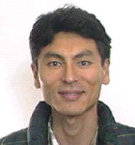
Ik-Kyung Jang, MD, PhDIk-Kyung Jang, MD, PhD is Professor of Medicine at Harvard Medical School, Director of the Cardiology Laboratory for Integrative Physiology and Imaging (CLIPI) at Massachusetts General Hospital. Dr. Jang came to Massachusetts General Hospital in 1987 from Leuven University in Belgium, where he has completed his residency in medicine and fellowship in cardiology. He also successfully defended his doctorate thesis at the same university. After his advanced fellowship in cardiology at Mass General, he joined the staff and is currently working as a physician and an interventional cardiologist in the Cardiology Division. His research interest has been acute coronary syndromes including acute myocardial infarction. His earlier research focused on pharmacology and physiology of thrombosis and thrombolysis including thrombin hypothesis and platelet inhigition. For the last twelve years he has pioneered the application of intravascular Optical Coherence Tomography (OCT) to patients to better characterize coronary plaques and to understand the mechanisms of plaque rupture. Dr. Jang was the first to perform intravascular OCT procedure in a patient. In addition, he was the principal investigator for the recent US multicenter OCT trial. Dr. Jang has been invited to lectures at numerous national and international meetings. His publications number more than 200. |
|
|
Iris McNulty, RN, Research Nurse and CoordinatorIris A. McNulty received a BA in Anthropology from Brown University and her BSN from Simmons College. She has worked at Massachusetts General Hospital since 1995, with a focus in Cardiology since 2000. In 2003 she started working with Dr. Ik-Kyung Jang as a research nurse, and has coordinated multiple investigational drug trials, investigational device trials and observational studies. Iris has significant experience working on OCT trials; she was the site coordinator of the OCT trial that resulted in FDA approval of Lightlab Imaging's OCT system. She also helped plan the first Mass General OCT Registry Symposium, which took place in March 2010 and was attended by international OCT experts. |
|
|
Dr. Hang Lee, PhD, StatisticianDr. Lee is the study statistician of the OCT Registry. He is the lead statistician of the Harvard Catalyst Biostatistics Program at Mass General and the Mass General Clinical Research Program Biostatistics Consulting Laboratory, and he serves as the primary statistician of the Gynecologic Oncology Program at Dana-Farber Harvard Cancer Center. He is also the lead statistician of the NHLBI-funded ROMICAT trial (Rule Out Myocardial Ischemia/Infarction Using Computer Assisted tomography - A Randomized, Controlled, Multicenter Diagnostic Trial). Dr. Lee is Assistant Professor of Medicine at Harvard Medical School and has over 10 years of experience in a wide range of Mass General and Harvard-based collaborative clinical trials and epidemiologic investigations. His statistical expertise is in the longitudinal data, statistical genetics, clinical trials design and complex data analysis, and he has authored and co-authored over 120 clinical study articles. |
|
|
Christina Kratlian, MA, Coordinator/Data Manager Christina Kratlian received her BA in Psychology from Boston University and her MA in Medical Science from Boston University School of Medicine. As an undergraduate, Christina worked as a research assistant in medical education at BUSM. Her responsibilities included compiling an extensive literature review, assisting with study development, and contributing to a grant proposal, which subsequently led to funding. As a Masters student, Christina developed a unique study investigating distress and anxiety in children during routine immunizations. In August 2011, Christina came to Mass General to work under Dr. Ik-Kyung Jang as a clinical research coordinator and is the data manager for the Registry. |
|
Rocco Vergallo, MD, Research fellowDr. Vergallo is a research fellow in the Cardiovascular Research Center of Massachusetts General Hospital. He received his MD in 2011 from the Catholic University of Rome and came to Mass General in July 2012 to work with Dr. Jang on the Mass General OCT Registry. His main research interests are investigating the relationship between OCT plaque characteristics and novel circulating biomarkers, and clarifying the mechanisms of plaque vulnerability. |
|
|
Haibo Jia, MD, PhD, Research fellowDr. Jia is a research fellow in the Cardiology Division of the Massachusetts General Hospital Department of Medicine. He came to Mass General Hospital in March 2012 from the Cardiology Department of the 2nd Affiliated Hospital of Harbin Medical University in Harbin, China. Dr. Jia received his MD in 2008 and his PhD in 2011, both from Harbin Medical University. His main research interests are investigating the relationship between circulating biomarkers and plaque vulnerability as determined by OCT, and elucidating the role of plaque erosion in the pathogenesis of acute coronary syndrome using intracoronary OCT. Dr. Jia has been working with the MGH OCT Registry in Harbin since September 2010. |
|
|
Farhad Abtahian, MD, PhD, Research fellowFarhad Abtahian completed medical school and obtained a PhD at the University of Pennsylvania School of Medicine where he studied vasculogensis and lymphangiogenesis with Drs. Mark Kahn and Gary Koretzky. He then completed residency in internal medicine at Brigham and Women's Hospital. Currently, he is in his third year of fellowship in cardiovascular medicine at Massachusetts General Hospital. His research interest is focused on using intravascular imaging to better understand the pathophysiology of coronary artery disease and pulmonary hypertension. In 2013, he will be entering the interventional cardiology fellowship program at Mass General. |
|
|
Jinwei Tian, MD, PhD, Research fellowDr. Tian is a research fellow in the Cardiovascular Research Center of Massachusetts General Hospital. He came to Mass General Hospital in Oct 2012 from the Cardiology Department of the 2nd Affiliated Hospital of Harbin Medical University, Harbin, China. Dr. Tian received his MD and PhD in July 2012 from Harbin Medical University. He mainly focuses on investigating the traditional and novel risk factors for the plaque vulnerability and investigating the conservative therapy for patients with acute coronary syndrome caused by plaque erosion. Dr. Tian has been working with the MGH OCT Registry in Harbin since September 2010. |
|
|
Sining Hu, MD, Research fellowDr. Hu is a research fellow in the Cardiology Division of the Massachusetts General Hospital Department of Medicine. She came to Mass General Hospital in November 2012 from the Cardiology Department of the 2nd Affiliated Hospital of Harbin Medical University in China. Dr. Hu received her MD in 2010 and became a resident in 2010. Her previous research work mainly focused on the impact of angiogenesis on the progression of atherosclerosis using OCT in animal models. Now she is working on plaque progression and regression in ACS patients and vessel response after PCI using OCT. |
OCT Registry Partnering Institutions
To build the registry, we have partnered with researchers at world class academic medical centers, such as:
| Country | hospital | Principal Investigator | |
|---|---|---|---|
|
Concord Repatriation General Hospital | Dr. Harry Lowe | |
|
The Northern Hospital |
Dr. Peter Barlis | |
|
Prince Charles Hospital | Dr. Owen Christopher Raffel | |
| China | Harbin Medical University, Department of Cardiology | Dr. Bo Yu | |
| China |
Queen Mary Hospital, Hong Kong University | Dr. Stephen Lee | |
| Japan | Nippon Medical School | Dr. Kyoichi Mizuno | |
| Japan | Iwate Medical University | Dr. Tomonori Itoh | |
| Japan | Nara Medical University | Dr. Shiro Uemura | |
| Japan | Tsuchiura Kyodo General Hospital | Dr. Tsunekazu Kakuta | |
| Korea | Ajou University Hospital | Dr. So-Yeon Choi | |
| Korea | Asan Medical Center | Dr. Seung-Jung Park | |
| Korea | East-West Neo Medical Center, Kyunghee University | Dr. Chang-Bum Park | |
| Korea | Kyung Hee University Hospital | Dr. Soo-Joong Kim | |
| Korea | Yonsei University | Dr. Yangsoo Jang | |
| Singapore | National Heart Centre Singapore | Dr. Stanley Chia | |
| USA | Massachusetts General Hospital |
Dr. Ik-Kyung Jang | |
| USA | Mayo Clinic |
Dr. Abhiram Prasad | |
| USA | Emory University |
Dr. Habib Samady |
|
| USA | University of Pittsburgh | Dr. Catalin Toma | |
| USA | University of Vermont | Dr. Harold Dauerman |
Researchers at Massachusetts General Hospital are leading the first optical coherence tomography (OCT) registry, with the goal of:
OCT imaging creates extremely high-resolution images from within the artery and can pinpoint the microscopic characteristics of a vulnerable plaque. To define these unique characteristics, we are creating a database with more than 3,000 patients who have had OCT imaging. We will then follow these patients for up to five years and collect detailed demographic and clinical information about them.
Study Plan
Using a prospective data collection approach, we will gather information for approximately 3,000 patients in our database. Our research team and international research partners will collect detailed demographic and clinical information for each patient for whom OCT is used using electronic case report forms (eCRF).
Subject Selection
All patients in the registry will have had OCT imaging performed during cardiac catheterization.
Learn more about the OCT Registry on ClinicalTrials.gov
Subject Enrollment
To learn more about how to enroll your patient in the registry, contact:
Christina Kratlian, Data Manager
Mass General OCT Registry
Massachusetts General Hospital
Phone: 617-643-9132
Email: ckratlian@partners.org
Study Procedures
We plan to follow all of the patients in our registry through phone calls or clinical visits six months after their OCT imaging, and then every year for up to five years. During this time, we will document any clinical events, which might include death, myocardial infarction, revascularization (target vessel and non-target vessel), ischemic cerebrovascular events and bleeding.
All patients’ identifiable information will be removed and a study code number will be assigned to each patient. This study number will be used in the eCRF and on the transferred images.
MGH Hotline 04.09.10 Optical coherence tomography (OCT) is an intravascular imaging technology that offers the promise of revealing the microscopic characteristics of a vulnerable coronary plaque.
OCT is a recently FDA-approved intravascular imaging modality, which is now available in many catheterization laboratories. However, most cardiologists are not familiar with this new technology. Cardiologists need more education about the interpretation of images and how to use the information to improve PCI and patient outcome.
OCT Publications from Mass General Cardiology:
Yabushita H, Bouma BE, Houser SL, Aretz HT, Jang IK, Schlendorf KH, Kauffman CR, Shishkov, M, Kang DH, Halpern, EF, Tearney GJ. Characterization of human atherosclerosis by optical coherence tomography. Circulation 2002;106:1640-5.
Jang IK, Bouma B, Kang DH, Park SJ, Park SW, Seung KB, Choi KB, Shishkov M, Schlendorf K, Pomerantsev E, Houser SL, Artez HT, Tearney GJ. Visualization of coronary atherosclerotic plaques in patients using optical coherence tomography: Comparison with Intravascular Ultrasound. J Am Coll Cardiol 2002;39:604-9.
Bouma BE, Tearney GJ, Yabushita H, Shishkov M, Kauffman CR, DeJoseph Gauthier D, MacNeill BD, Houser SL, Aretz HT, Halpern EF, Jang IK. Evaluation of intracoronary stenting by intravascular optical coherence tomography. Heart 2003;89:317-21.
Diaz-Sandoval L, Bouma B, Tearney GJ, Jang IK. Optical coherence tomography as a tool for percutaneous coronary interventions. Cathet Cardiovasc Intervent 2005: 65(4):492-6.
Jang IK, Tearney G, MacNeill B, Takano M, Moselewski F, Iftima N, Shishkov M, Houser S, Aretz HT, Halpern E, Bouma B. In vivo characterization of coronary atherosclerotic plaque by use of optical coherence tomography. Circulation 2005:111;1551-5.
Raffel OC, Tearney GJ, DeJoseph D, Halpern EF, Bouma BE, Jang IK. Relationship between a systemic inflammatory marker, plaque inflammation and plaque characteristics determined by intravascular optical coherence tomography. Arterioscler Thromb Vasc Biol. 2007;27: 1820-1827
Raffel OC, Akasaka T, Jang IK. Cardiac optical coherence tomography. Heart J. 2008;94:1200e10.
Chia S, Raffel OC, Takano M, Tearney GJ, Bouma BE, Jang IK. Association of statin therapy with reduced coronary plaque rupture: an optical coherence tomography study. Coron Artery Dis. 2008 Jun;19(4):237-42.
Raffel OC, Merchant FM, Tearney GJ, Chia S, Gauthier DD, Pomerantsev E, Mizuno K, Bouma BE, Jang IK. In vivo association between positive coronary artery remodelling and coronary plaque characteristics assessed by intravascular optical coherence tomography. Eur Heart J. 2008 Jul;29(14):1721-8. Epub 2008 Jun 24.
Low AF, Kawase Y, Chan YH, Tearney GJ, Bouma BE, Jang IK. In vivo characterisation of coronary plaques with conventional grey-scale intravascular ultrasound: correlation with optical coherence tomography. EuroIntervention. 2009 Mar;4(5):626-32.
Kim JS, Jang IK, Kim JS, Kim TH, Takano M, Kume T, Hur NW, Ko YG, Choi D, Hong MK, Jang Y. Optical coherence tomography evaluation of zotarolimus-eluting stents at 9-month follow-up: comparison with sirolimus-eluting stents. Heart. 2009 Dec;95(23):1907-12. Epub 2009 Jun 16.
Kim JS, Jang IK, Fan C, Kim TH, Kim JS, Park SM, Choi EY, Lee SH, Ko YG, Choi D, Hong MK, Jang Y. Evaluation in 3 months duration of neointimal coverage after zotarolimus-eluting stent implantation by optical coherence tomography: the ENDEAVOR OCT trial. JACC Cardiovasc Interv. 2009 Dec;2(12):1240-7.
Cho JM, Raffel OC, Stone JR, Kim CJ, Jang IK. Spontaneous recanalization of a coronary artery after thrombotic occlusion: in vivo demonstration with optical coherence tomography. J Am Coll Cardiol. 2010 Mar 23;55(12):1274. No abstract available.
Hou J, Qi H, Zhang M, Meng L, Han Z, Yu B, Jang IK. Pulmonary vascular changes in pulmonary hypertension: optical coherence tomography findings. Circ Cardiovasc Imaging. 2010 May;3(3):344-5. No abstract available. PMID: 20484114
Hou J, Qi H, Zhang M, Ma L, Liu H, Han Z, Meng L, Yang S, Zhang S, Yu B, Jang IK. Development of lipid-rich plaque inside bare metal stent: possible mechanism of late stent thrombosis? An optical coherence tomography study. Heart. 2010 Aug;96(15):1187-90.PMID: 20639235 [PubMed - in process]Related citations
Phone: 617-643-9132
Email: ckratlian@partners.org
Contact Christina Kratlian, OCT Data Manager, for more information about the registry or to learn how to participate in this research initiative.

Proto magazine stakes its ground on medicine's leading edge, reporting back from the frontiers of research and practice - exploring breakthroughs, dissecting controversies and opening a forum for informed debate.
Discover the largest hospital-based research program in the U.S. and how clinicians and scientists chart new terrain in biomedical research to treat and prevent human disease and bring the latest advances to patient care
Discover what makes Massachusetts General Hospital not just one of the best places to receive patient care but also one of the best places to work.