

Information for Parents of Newly Diagnosed Patients
You have just been told your child suffered a stroke. What do you need to know? First of all, please know that you are not alone, and that there is a lot you can do to help your child.
If your child has recently received a diagnosis of stroke you’re probably experiencing a variety of emotions and you probably have hundreds of questions about the condition, the prognosis, and available treatments. The Mass General Multidisciplinary Pediatric Cerebrovascular Center is here to help your child, to offer hope and to provide information and resources that may be useful to you and your child in this journey
What Do I Do Next?
Newborns
If your newborn has been diagnosed with stroke, close monitoring, control of seizures and evaluations are necessary to prevent further injury to the brain and optimize neurological development and recovery. It is very important that your baby is evaluated by a Pediatric/Perinatal Stroke Team as soon as possible. To reach the Child Neurology on-call doctor, call 617-726-2000 at any time.
Infants and Children
All patients with symptoms of stroke, regardless of age, need to be assessed immediately by health care professionals. In particular, infants who demonstrate hand preference before 18 months should see their family doctor or pediatrician and request a referral to pediatric neurologist. Your primary care physician can request a consultation with the Pediatric Stroke and Vascular Service at 617-643-0241.
After the Emergency
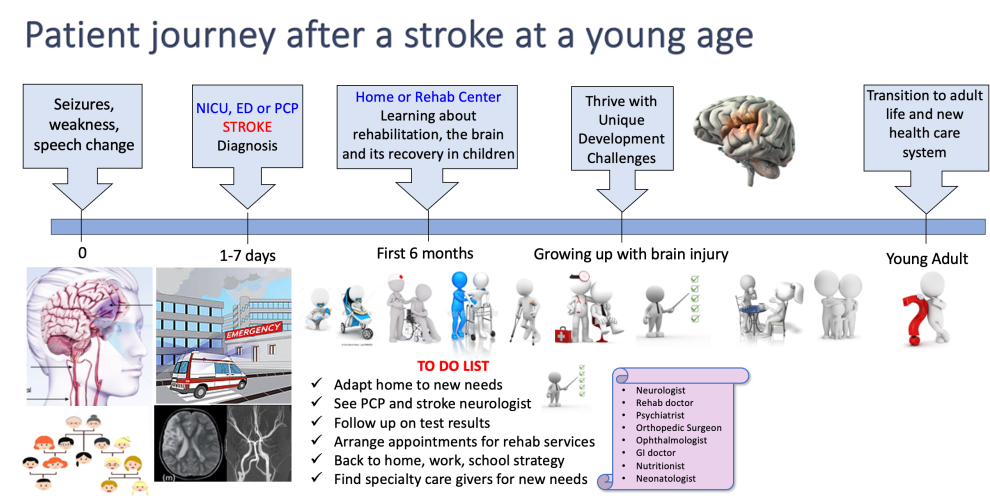
After hospitalization, patients will go directly home or to a rehabilitation center. The first weeks and months after diagnosis may include:
- Adapting your home to new needs
- Follow-up appointments with a primary care doctor and stroke neurologist
- Discussion and follow-up on test results
- Appointments for rehab services
- Developing a strategy to return to home, work or school
- Finding specialty care givers for new needs
Support Our Work
Your gift will support comprehensive, compassionate clinical care and innovative research to help for children recovering from stroke.