
Mass General Brigham Cancer Institute
Early Detection and Diagnostics Program

Early Detection and Diagnostics Program
Mass General Brigham Cancer Institute
Phone: 781-487-6212
Fax: 781-487-6201 (ATTN: Early Detection)
Explore the Early Detection and Diagnostics Program
What is the Early Detection and Diagnostics Program?
Most cancers are detected only after symptoms appear, which often means they are diagnosed at a later stage, when treatment is more complex. The Early Detection and Diagnostics Program focuses on finding cancer sooner when treatment has the greatest chance of success. We support patients at every stage of cancer care, including before cancer is diagnosed, by identifying risk, guiding screening, and coordinating next steps.
We can detect and evaluate risk early across a range of cancer types, including:
- Breast
- Lung
- Colorectal
- Gynecologic
- Skin
- Hereditary cancers
Depending on your personal and family history, imaging findings, or genetic risk, your care team may recommend targeted screening, diagnostic testing, or emerging blood-based technologies designed to detect cancer signals earlier.
Our team offers patients a streamlined care journey. We expedite access to a comprehensive network of experts who specialize in cancer risk assessment, developing new screening technologies, and improving early cancer detection and treatment.
When to contact us
The Early Detection and Diagnostics Program cares for adults who fall into the following categories:
- People with a mass, nodule, lesion, or other abnormal finding on imaging that may suggest cancer
- People with an increased risk of cancer because of their family history of cancer, a genetic predisposition, occupational exposures, medical history or medication, or other risk factors
- People who want expert guidance on cancer screening based on age, family history, or personal risk, even if they feel well
Patients and referring providers can request an appointment by calling 781-487-6212. Both in-person and virtual appointments are available.
Our team works closely with screening, genetics, and specialty programs across Mass General Brigham to help patients understand where to start and what comes next.
What to expect at your visit
Your first visit to the Early Detection and Diagnostics Program will consist of a comprehensive consultation with either a medical oncologist or an advanced practice provider (APP). Based on the referral reason, your provider will review your medical history and family history of cancer. This helps us understand your individual risk of developing cancer and recommend what additional testing, if any, is needed.
Depending on your needs, your clinician may recommend one or more of the following screening exams or diagnostic tests:
- Germline genetic testing
- Mammogram
- CT or MRI scan
- Colonoscopy or Endoscopy
- Gynecologic exam with PAP smear
- PET-CT scan
- MCD blood test
- Biopsy
- Other emerging technologies for cancer early detection
Genetic testing for individuals with a family history of cancer
We offer comprehensive genetic testing to patients and families with a hereditary cancer predisposition. It’s important to ask family members for health history so that you can make informed decisions about screening and preventive options.
During your visit, our team will review your personal and family history, help identify potential patterns of inherited risk, and determine how the information may affect your medical decisions. If information from your intake suggests genetic counseling may be helpful, we may schedule a visit with a genetic counselor during or soon after your first appointment.
What to expect after your visit
After your consultation and any recommended testing, your care team will review your results with you.
If your testing identifies an abnormal finding or elevated cancer risk, your team will coordinate timely follow-up care and connect you with the appropriate specialists across Mass General Brigham. Referrals may include:
- Surgery
- Radiology
- Dermatology
- Genetic counseling
- Smoking cessation
- Lifestyle Medicine Program
- Nutrition
If no cancer is detected, your clinician will work with you to develop a personalized prevention or monitoring plan based on your personal and family history and risk factors. This may include recommendations for future screening, risk-reduction strategies, lifestyle or wellness support, or genetic counseling when appropriate.
Clinical trials
The Mass General Brigham Cancer Institute invests in research and clinical trials to advance cancer prevention, early detection, and treatment. Our collaborations with institutions like the Jameel Clinic at MIT, Koch Institute for Integrative Cancer Research at MIT, and Zhu Family Center for Global Cancer Prevention allow us to be at the forefront of emerging early detection technologies.
Search cancer clinical trials at Mass General Brigham Cancer Institute.
Frequently asked questions
What specialized blood tests are available through your program?
We currently offer two types of blood-based testing:
- Multi-cancer detection (MCD) testing
- Germline genetic testing
You can call our clinic at 781-487-6212 to self-refer or you can have your provider send a referral to fax 781-487-6201 ATTN: Early Detection.
Are these tests covered by my insurance?
- MCD testing: At this time, multi-cancer detection is not covered by insurance. The typical out-of-pocket cost for this test is about $799.
- Genetic testing: Standard screening and diagnostic tests such as imaging, biopsies, and genetic testing may be fully or partially covered depending on your insurance plan and family history. The maximum out-of-pocket cost is typically $250.
What happens if I receive a positive result?
If you receive a positive result on either a genetic test or an MCD test, a team member will call you to explain your result and outline next steps.
- Positive MCD test: Your care team will review your results and recommend additional testing, imaging, or evaluations as appropriate. Some MCD tests can not only show that a cancer signal was detected but also the most likely type of cancer.
- Positive genetic test: If your genetic test identifies a mutation linked to increased cancer risk, you will meet with one of our genetic counselors, who will provide more details about your specific mutation and connect you with any other appropriate specialists. Depending on your test result, you may be eligible for additional cancer screening.
What is the difference between germline genetic testing and MCD testing?
MCD testing
- Screens for signs of cancer that may already be present in the body
- Uses a single blood sample taken at one point in time
- Cannot detect all cancer types or stages
- Is not FDA-approved but is commercially available at an out-of-pocket cost
- Is being studied to better understand accuracy, risks, and benefits
Germline genetic testing
- Analyzes a blood or saliva sample for inherited genetic mutations
- Identifies changes that may increase your lifetime risk of certain cancers
- Does not detect whether you currently have cancer
- Helps guide decisions about future screening, surveillance, and prevention
Home Base Program collaboration
Our program partners with the Home Base COMBHAT program to support the health needs of active-duty service members and veteran special operations forces. As part of this collaboration, we offer specialized cancer risk screenings for individuals participating in Home Base services. The goal is to provide timely evaluation, early detection, and coordinated care for those who may be at increased risk.
Meet our team

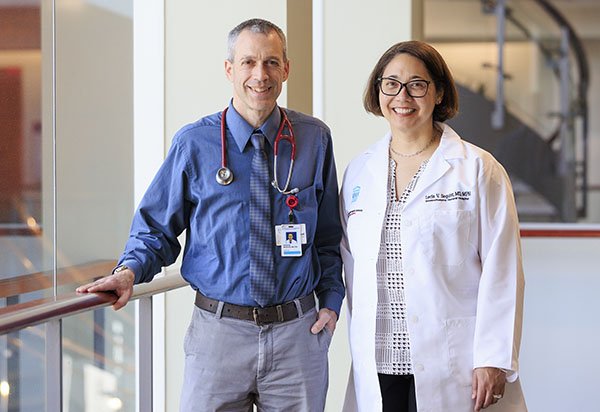
- Program Director

- Clinical Director






Other team members include:
- Medical, surgical, and radiation oncologists
- APPs
- Other medical and surgical specialists
- Nurses
- Patient navigators
- Genetic counselors
- Cancer epidemiologists
- Research support team
Patient stories


Patient resources
Fire Health Study
This partnership aims to increase lung cancer early detection access among firefighters.
Cancer Genetics
Learn more about care for patients and families with hereditary cancer predisposition.
Pulmonary Nodule Clinic
Our team works with patients to develop follow-up care following review of chest CT scans.
Psychiatric Oncology
We bring together experts in psychiatry & psychology to help patients cope with cancer.
Request an Appointment or Referral
Patients and referring providers can request an appointment with the Early Detection and Diagnostics Program team by phone.