
Kraft Prize Symposium
Kraft Prize Symposium
Overview
Since 2006, the Mass General Brigham Krantz Family Center for Cancer Research has annually honored a luminary in the field - an extraordinary scientist, who has made major advances in our understanding of cancer and its treatment, and has been recognized as a true mentor by teaching and inspiring the next generation of cancer researchers. This year, the 2026 Kraft Award will be presented to Scott W. Lowe, PhD of the Sloan Kettering Memorial Cancer Center for his groundbreaking work in the fields of cancer biology, genetics, and senescence.
2026 Event & Agenda
2026 Jonathan Kraft Prize for Excellence in Cancer Research
Thursday, May 28, 2026 | 1:30pm - 5:30pm
Simches 3110 Auditorium, Simches Building 3rd Floor
185 Cambridge Street, Boston, MA 02114
Download agenda (pdf) | Register now
1:30pm - Welcome and Opening Remarks
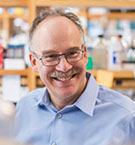 Daniel A. Haber, MD, PhD
Director, Krantz Family Center for Cancer Research
Introductions
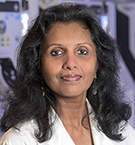 Shyamala Maheswaran, PhD
Symposium Chair
Mary B. Saltonstall Endowed Chair in Oncology
Professor of Surgery
Krantz Family Center for Cancer Research
Mass General Brigham Cancer Institute
and Harvard Medical School
Dr. Shyamala Maheswaran is Professor of Surgery at the Krantz Family Center for Cancer Research. As a world-renowned expert in cancer metastasis and epithelial-mesenchymal transformation (EMT), she serves as Scientific Director for the Center for CTC Innovation at the KFCCR.
Dr. Maheswaran’s expertise is characterizing the biology of breast cancer metastasis. Her work has focused on the genomic instability that arises in cancer cells undergoing epithelial to mesenchymal plasticity while maintaining proliferation, and mechanisms that trigger cellular senescence in cancer cells. She has received multiple awards for her work including the MGH Clinical Research Team Award, AACR Team Science Award, Douglass Family Foundation Prize for Excellence in Oncology Research, MGH Martin Prize for Basic Research and the Outstanding Scientist Award from the American Association of Indian Scientists in Cancer Research (AAISCR).
1:40pm - "Nuclear degeneration in cellular senescence and chronic inflammation"
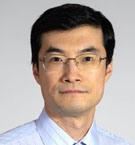 Zhixun Dou, PhD
Assistant Professor of Medicine
Krantz Family Center for Cancer Research
Mass General Brigham Cancer Institute
and Harvard Medical School
Dr. Zhixun Dou is an Assistant Professor at the Krantz Family Center for Cancer Research at Massachusetts General Hospital and Harvard Medical School. His research focuses on the intersection of aging and cancer, with a particular emphasis on nuclear events. His laboratory investigates how the cell nucleus undergoes degeneration during aging and tumorigenesis and seeks to elucidate the mechanisms underlying these processes. His work helped establish the concept of nuclear autophagy, demonstrating that nuclear components can be degraded through mammalian autophagy. His studies have also revealed how cytoplasmic chromatin activates innate immune signaling and contributes to senescence-associated inflammation. The Dou lab aims to develop new strategies to intervene in chronic inflammation associated with aging and cancer.
2:10pm - "Fatty acid metabolism in senescent cells, a matter of life and death"
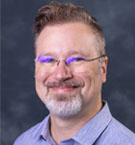 Christopher D. Wiley, PhD
Scientist II, Jean Mayer USDA Human Nutrition Research Center on Aging
Assistant Professor of Medicine
Tufts University
Dr. Christopher Wiley is a Scientist II at the Jean Mayer USDA Human Nutrition Research Center on Aging and an Assistant Professor at the Schools of Medicine and Nutrition at Tufts University.
His lab investigates the interface between metabolism, cellular senescence, and aging, with a focus on the relationship between cellular senescence and ferroptosis, mitochondrial dysfunction, and the role of diet in these processes. Dr. Wiley is a member of the American Aging Association, the Gerontological Society of America, and the International Cell Senescence Association.
2:40pm - Break
3:00pm - "Virome immunity role in senescent cell clearance"
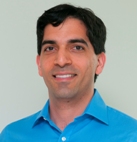 Shawn Demehri, MD, PhD
Arthur and Sandra Irving Endowed Chair in Cancer Immunology
Associate Professor in Dermatology (Cutaneous Biology Research Center)
Krantz Family Center for Cancer Research
Mass General Brigham Cancer Institute
and Harvard Medical School
Dr. Shawn Demehri holds the Arthur and Sandra Irving Endowed Chair in Cancer Immunology at Massachusetts General Hospital and is Associate Professor of Dermatology at Harvard Medical School. As a physician-scientist in the Cutaneous Biology Research Center and Krantz Family Center for Cancer Research, he studies cancer immunoprevention related to skin, breast, and other epithelial cancers. His laboratory is focused on determining the immune system's role in maintaining normal tissue homeostasis and preventing the early stages of cancer development. Dr. Demehri is a recipient of several awards, including the American Academy of Dermatology Young Investigator Award, American Society for Clinical Investigation Young Physician-Scientist Award (currently a member of ASCI), NIH Director’s Early Independence Award, Burroughs Wellcome Fund Career Award for Medical Scientists, Breast Cancer Alliance Young Investigator Award, Kimmel Scholar Award, LEO Foundation Award, Gray Foundation Award, and MGH Research Scholar Award.
3:30pm - "Senotype blueprint of the human endocrine pancreas"
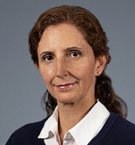 Cristina Aguayo-Mazzucato, MD, PhD
Assistant Professor of Medicine
Joslin Diabetes Center
Harvard Medical School
Dr. Aguayo-Mazzucato is an Assistant Professor at the Joslin Diabetes Center and Harvard Medical School and holds the Margaret A. Congleton Chair. Her laboratory aims to understand the contribution of pancreatic b-cell senescence to health and disease. Using animal and human disease models, she seeks to identify new therapeutic targets that can reverse dysfunction and early cellular death during the progression of Type 2 Diabetes. As part of the SenNet initiative, her group has mapped senescent cells in the human endocrine pancreas during human aging.
4:00pm - Break
4:20pm - Keynote Speaker Introduction & Prize Presentation
Daniel A. Haber, MD, PhD
Director, Krantz Family Center for Cancer Research
4:30pm - Prize Recipient/Keynote Speaker
Keynote Address: "Targeting the intersection between senescence and cancer"
 Scott W. Lowe, PhD
Chair, Cancer Biology & Genetics Program, Sloan Kettering Institute
Memorial Sloan Kettering Cancer Center
Investigator, Howard Hughes Medical Institute
Scott W. Lowe, PhD, is Chair of the Cancer Biology and Genetics Program at Memorial Sloan Kettering Cancer Center (MSK) and an Investigator of the Howard Hughes Medical Institute. He received his bachelor’s degree from the University of Wisconsin–Madison and his PhD from the Massachusetts Institute of Technology. His graduate studies established a role for p53 in DNA damage- and oncogene-induced apoptosis and linked p53 status to therapeutic response. Dr. Lowe initiated his independent research program at Cold Spring Harbor Laboratory as a Cold Spring Harbor Fellow and was subsequently promoted to faculty, where his laboratory made foundational contributions to the discovery and mechanistic characterization of oncogene-induced senescence. He moved to MSK in 2011, where, in addition to serving as Program Chair, he is Director of the Marie-Josée and Henry R. Kravis Cancer Ecosystems Project and holds the Geoffrey Beene Chair for Cancer Biology. His work has been recognized by numerous honors, including the Sidney Kimmel Scholar Award, Rita Allen Scholar Award, the AACR Outstanding Investigator Award and G.H.A. Clowes Award, the Paul Marks Prize, and the Alfred G. Knudson Award from the NIH. He is an elected member of the American Academy of Arts and Sciences, the National Academy of Sciences, and the National Academy of Medicine, and a Fellow of the American Association for Cancer Research.
2026 Kraft Prize Recipient
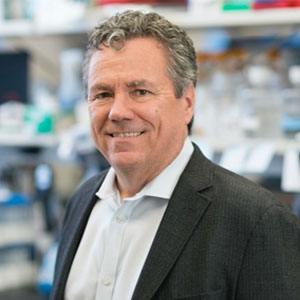 Scott W. Lowe, PhD
Chair, Cancer Biology & Genetics Program, Sloan Kettering Institute
Memorial Sloan Kettering Cancer Center
Investigator, Howard Hughes Medical Institute
Biography
Scott W. Lowe, PhD, is Chair of the Cancer Biology and Genetics Program at Memorial Sloan Kettering Cancer Center (MSK) and an Investigator of the Howard Hughes Medical Institute. He received his bachelor’s degree from the University of Wisconsin–Madison and his PhD from the Massachusetts Institute of Technology. His graduate studies established a role for p53 in DNA damage- and oncogene-induced apoptosis and linked p53 status to therapeutic response. Dr. Lowe initiated his independent research program at Cold Spring Harbor Laboratory as a Cold Spring Harbor Fellow and was subsequently promoted to faculty, where his laboratory made foundational contributions to the discovery and mechanistic characterization of oncogene-induced senescence. He moved to MSK in 2011, where, in addition to serving as Program Chair, he is Director of the Marie-Josée and Henry R. Kravis Cancer Ecosystems Project and holds the Geoffrey Beene Chair for Cancer Biology. His work has been recognized by numerous honors, including the Sidney Kimmel Scholar Award, Rita Allen Scholar Award, the AACR Outstanding Investigator Award and G.H.A. Clowes Award, the Paul Marks Prize, and the Alfred G. Knudson Award from the NIH. He is an elected member of the American Academy of Arts and Sciences, the National Academy of Sciences, and the National Academy of Medicine, and a Fellow of the American Association for Cancer Research.
Research Overview
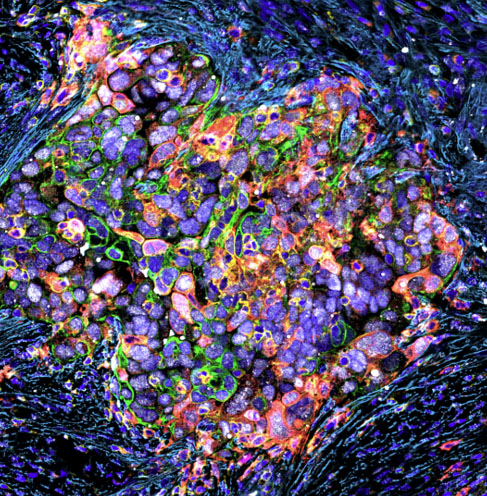
The Lowe laboratory integrates mouse genetics, functional genomics, and spatially resolved profiling approaches to define how tumor-suppressive programs constrain malignant progression and how their disruption promotes tumor evolution, therapeutic resistance, and disease relapse. A central objective is to elucidate how oncogenic mutations rewire epithelial cell states and remodel tissue ecosystems to create permissive microenvironments that support tumor initiation, progression, and immune evasion.
A major focus of the laboratory is the tumor suppressor p53. Ongoing studies define the mechanisms by which p53 enforces cell-intrinsic barriers to oncogenic transformation, limits aberrant cellular plasticity, and constrains the emergence of aggressive tumor states. Complementary efforts interrogate the consequences of p53 mutation, including lineage instability, altered stress responses, and rewiring of tumor–stromal interactions that collectively promote disease progression and resistance to therapy.
The laboratory further examines how neoplastic programs interface with the immune and stromal compartments across distinct stages of tumorigenesis. These studies address how early lesions sculpt local tissue environments, how these interactions evolve during malignant progression and therapeutic pressure, and how reciprocal signaling between tumor cells and their niche reinforces immunosuppressive and pro-fibrotic states. By resolving these processes at single-cell and tissue scale, the group aims to identify conserved, targetable programs that operate across tumor types.
An overarching conceptual framework emerging from this work is that tumor suppression operates at both cellular and tissue levels, integrating intrinsic stress responses with extrinsic constraints imposed by the microenvironment. Disruption of these coordinated programs enables the stabilization of pathological cell states and tumor-supportive niches that underlie aggressive disease behavior. The laboratory seeks to leverage these insights to develop therapeutic strategies that not only target malignant cells but also dismantle the permissive ecosystems that sustain them.
Previous Award Recipients
Jonathan Kraft Prize for Excellence in Cancer Research
Presented by Mass General Brigham Cancer Institute
2025
Jennifer A. Wargo, MD, MMSc
Professor, Department of Surgical Oncology, Division of Surgery
R. Lee Clark Endowed Professor
Professor, Department of Genomic Medicine, Division of Cancer Medicine
The University of Texas MD Anderson Cancer Center
2024
Howard Y. Chang, MD, PhD
D.K. Ludwig Professor of Cancer Research
Director, RNA Medicine Program at Stanford University
Professor of Dermatology and of Genetics, Stanford University, School of Medicine
Investigator, Howard Hughes Medical Institute
2023
Michelle Monje, MD, PhD
Professor of Neurology and Neurological Sciences
Stanford University
Investigator, Howard Hughes Medical Institute
2021
Aviv Regev, PhD
Head, Genentech Research and Early Development
Core member (on leave), Broad Institute of MIT and Harvard
Professor of Biology (on leave), MIT
2019
Carl June, MD
Richard W. Vague Professor in Immunotherapy
Director, Center for Cellular Immunotherapies
Perelman School of Medicine, University of Pennsylvania
2018
Charles Swanton, MD, PhD
Royal Society Napier Chair in Oncology
The Francis Crick Institute
Chair, Personalized Cancer Medicine, UCL Hospitals
Cancer Research-UK Lung Cancer Centre of Excellence
2017
Kevan M. Shokat, PhD
Professor, Department of Cellular and Molecular Pharmacology
University of California San Francisco
2016
Joan A. Steitz, PhD
Sterling Professor of Molecular Biophysics and Biochemistry
Yale School of Medicine
2015
C. David Allis, MD, PhD
Joy and Jack Fishman Professor
Laboratory of Chromatin Biology and Epigenetics, Rockefeller University
The Annual MGH Award In Cancer Research
In memory of Nathan and Grace Shiff
2014
Hans Clevers, MD, PhD
President of the Royal Netherlands Academy of Arts and Sciences
Professor of Molecular Genetics, University Utrecht, Netherlands
2013
James Allison, PhD
Chair, Department of Immunology
MD Anderson Cancer Center, Houston, TX
2012
Craig Thompson, MD
President and Chief Executive Officer
Memorial Sloan-Kettering Cancer Center, New York
2011
Michael Stratton, MD, FRS
Director, Wellcome Trust Sanger Institute
2010
Charles Sawyers, MD
Chairman of the Human Oncology and Pathogenesis Program
Memorial Sloan-Kettering Cancer Center, New York
2009
Bert Vogelstein, MD
Director of the Ludwig Center for Cancer Genetics & Therapeutics
Sidney Kimmel Comprehensive Cancer Center
Johns Hopkins University, Maryland
2008
Titia de Lange, PhD
Associate Director of the Anderson Cancer Center
Rockefeller University, New York
2007
Joan Massague, PhD
Chairman of the Cancer Biology and Genetics Program
Memorial Sloan-Kettering Cancer Center, New York
2006
Anton Berns, PhD
Director of Research and Chairman of the Board of Directors,
Netherlands Cancer Institute and Antoni van Leeuwenhoek Hospital, The Netherlands
Past Events
View Past Events
2025 Jonathan Kraft Prize for Excellence in Cancer Research
May 29, 2025 | Download Event Flyer
The 2025 Kraft Award was presented to Jennifer A. Wargo, MD, MMSc of the University of Texas MD Anderson Cancer Center for her groundbreaking work in the microbiome and cancer immunology.
2024 Jonathan Kraft Prize for Excellence in Cancer Research
May 2, 2024 | Download Event Flyer
The 2024 Kraft Award was presented to Howard Chang, MD, PhD of Stanford University for his groundbreaking work on mechanisms that coordinate the activities of global gene expression programs controlling cell fate.
2023 Jonathan Kraft Prize for Excellence in Cancer Research
May 2, 2023 | Download Event Flyer
The 2023 Kraft Award was presented to Michelle, Monje, MD, PhD of Stanford University for her groundbreaking work in Neuro-Oncology.
2021 Jonathan Kraft Prize for Excellence in Cancer Research
November 4, 2021 | Download Event Flyer
The 2021 Kraft Award was presented to Aviv Regev, PhD, Head of Genentech Research and Early Development, for her groundbreaking work in cancer heterogeneity and single cell genomics.
2019 Jonathan Kraft Prize for Excellence in Cancer Research
May 2, 2019 | Download Event Flyer
The 2019 Kraft Award was presented to Carl June, MD, of the University of Pennsylvania, for his outstanding work in CAR T cell therapy for cancer.
2018 Jonathan Kraft Prize for Excellence in Cancer Research
May 3, 2018 | Download Event Flyer
The 2018 Kraft Award was presented to Charles Swanton, MD, PhD, of the Frances Crick Institute and Cancer Research-UK, for his outstanding work that has led to insight into genomic diversity within cancers and molecular mechanisms driving cancer evolution.
2017 Jonathan Kraft Prize for Excellence in Cancer Research
May 3, 2017 | Download Event Flyer
The 2017 Kraft Award was presented to Dr. Kevan M. Shokat, of UCSF, for his outstanding work in pioneering a technique to identify the substrates of individual kinases, and for developing a method to precisely control a particular kinase’s activity using small-molecule inhibitors.
2016 Jonathan Kraft Prize for Excellence in Cancer Research
May 26, 2016 | Download Event Flyer
The 2016 Kraft Award was presented to Dr. Joan A. Steitz, of Yale University, for her outstanding contributions to the field of non-coding RNA-protein complexes and their emerging role in abnormal development and cancer.
Kraft Prize Symposium
The 2025 Jonathan Kraft Prize for Excellence in Cancer Research will take place May 29, 2025.