
Laboratory for Deep Neurophenotyping
Laboratory for Deep Neurophenotyping
101 Merrimac Street
Boston,
MA
02114
Email: agupta@mgh.harvard.edu
Explore This Lab
Overview
We are a group of neurologists and computer scientists who share the passion for using technology to precisely understand how certain neurologic diseases impact human motor and cognitive function. We believe that capturing high-definition behavior at scale will lead to the discovery of fundamental characteristics of disease that will inform new approaches to therapy development, diagnosis, and management. Our initial focus is on cerebellar ataxia, Parkinson’s disease, and neurodegenerative disease in general.
We are deeply thankful to the patients and patient advocates who donate their time to our research program during their visit to Massachusetts General Hospital. Likewise, this work would not be possible without the generous support from the Alternating Hemiplegia of Childhood Foundation, Apple Inc., the Ataxia-Telangiectasia Children’s Project (A-TCP), Biogen Inc., the Broad Institute, Cure AHC, CureDRPLA, the Dake Family Foundation, the Department of Defense, Friedreich's Ataxia Research Alliance (FARA), Insmed, the Massachusetts Life Sciences Center, NINDS, the Orphan Disease Center of UPenn, RARE Hope, Servier, the Wolverine Foundation and the Mass General Department of Neurology. We have recently launched a new open source platform for large scale behavioral phenotyping called Neurobooth. Learn more about our first clinical study using Neurobooth in the Mass General Neurology clinic.
Group Members
 Anoopum Gupta, MD, PhD
Principal Investigator
Dr. Gupta received his undergraduate degree in Electrical Engineering from Georgia Tech, his medical degree from the University of Pittsburgh School of Medicine, and his PhD in Robotics and the Center for the Neural Basis of Cognition from Carnegie Mellon University’s School of Computer Science. He completed his residency in neurology at the Mass General Brigham/Harvard Medical School Residency Program. Dr. Gupta’s previous research utilized methods in machine learning and signal processing to understand how large populations of neurons in the hippocampus support learning, memory, and decision making.
 Siddharth Patel, PhD
Post-Doctoral Fellow
Siddharth received his PhD in Biophysics from Indian Institute of Science, Bangalore where his research focused on understanding the sequence-structure-function relationships in proteins. He translated this experience, analyzing Antibody structures at Pfizer, where he applied machine learning techniques to predict antibody properties. As a data scientist at MindMics, a health tech startup, he designed and implemented algorithms on wearable sensor time series data to monitor cardiovascular health. He is interested in characterizing movement impairment and quantifying progression of neurodegeneration by applying and interpreting deep learning models on wearable sensor data.
 Divya Kulkarni, PhD
Post-Doctoral Fellow
Divya Kulkarni obtained her PhD in Computer Science and Engineering from the Indian Institute of Technology (IIT) Guwahati, India. Her doctoral research explored the fusion of bio-inspired techniques and machine learning, specifically focusing on lifelong learning in robots. She has also worked on transfer learning in deep neural networks as part of her doctoral thesis. Apart from her thesis, she worked on two open-source mobile agent tools for robots and cyber-physical systems, namely Tartarus and Tarpy, during her PhD. As a machine learning scientist at Eli Lilly, she worked mainly on computer vision to tackle challenging tasks in image segmentation, specifically, to understand drug penetration in the brain tissues.
 Hasnaa Ouadoudi Belabzioui, PhD
Post-Doctoral Fellow
Hasnaa Ouadoudi Belabzioui earned her PhD in Computer Science from the École Normale Supérieure de Rennes. Her research has explored the estimation of joint torques using data from minimally invasive systems, such as depth and RGB cameras, in industrial applications. She is now focused on extracting key features from data collected from patients with neurodegenerative diseases, aiming to enhance diagnostic predictions and monitor disease progression.
 Ryan Anthony de Belen, PhD
Post-Doctoral Fellow
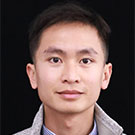
Ryan received his MPhil and PhD degrees in Computer Science and Engineering from UNSW Sydney. During his PhD, he developed computational models that utilize multimodal information to quantify and/or simulate human behaviors. Eventually, these models are translated to practical applications, such as automatic digital behavior phenotyping and digital biomarker discovery. He has held applied scientist roles in various tech companies ranging from healthcare startups to Amazon.
 Lawrence White
Software Engineer
Lawrence received an MBA from New York University specializing in data science and information technology. He has held engineering and management roles in a number of tech companies ranging from early-stage startups to Google. Recently, his work was focused on the intersection of software and cancer genomics at Foundation Medicine. His interests include the use of sensor data to quantify the severity and progression of neurological disease.
 Carrie Lu
Clinical Research Assistant
Carrie graduated with a Bachelor of Arts degree in Psychology from Barnard College of Columbia University in 2023. She gained research experience in college and as a post-baccalaureate research assistant in the Clinical Psychology department at Harvard University, where she contributed to studies on anxiety disorders (OCD/PTSD/Bipolar). Carrie also worked as a Mental Health Specialist at McLean Hospital, focusing on acute trauma management at an inpatient Trauma Unit. She is passionate about advancing the understanding of brain function, behavior, and cognition to contribute to the field of clinical research and diagnosis/treatment precision.
 Katie Arrambide
Clinical Research Coordinator
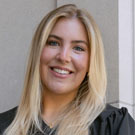
Katie graduated from Harvard College with a Bachelor's degree in Neuroscience in 2025. She hopes to attend medical school in the future and is especially interested in working with young populations. Katie is passionate about understanding and improving the patient experience in neurologic disease research.
 Kimby Rosenthal
Clinical Research Coordinator
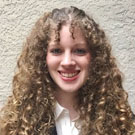
Kimby Rosenthal studied psychology, neuroscience, and intellectual history as an Integrated Studies Scholar at the University of Pennsylvania. She researched mtDNA biomarkers in the Penn Molecular Anthropology Lab in association with National Geographic’s Genographic Project and was awarded the Saporito Cultural Science Thesis Prize, graduating Phi Beta Kappa. Kimby initially studied medicine during Covid, with a particular passion for neurology, before switching to clinical research with a Master’s in biomedical sciences, focusing on glial versus neuronal biomarkers for TBI and light-sheet microscopy of immediate early genes. She plans to continue studying clinical neuroscience and neuropsychology.
 Annika Toivonen
Clinical Research Coordinator
Annika graduated from Northeastern University with a Bachelor of Science degree in Health Science and Psychology with a minor in Data Science in 2025. She has worked in a variety of clinical and research domains in the genomics, psychiatry, psychology, and neurology departments across several Boston-based hospitals. Annika aims to pursue a PhD in Clinical Psychology with a focus in neuropsychology and is passionate about how physiological measures and technology can improve early diagnosis and symptom detection in existing neuropsychological assessment tools while enhancing patient-centered care.
 Nathan Zhang
Clinical Research Coordinator
Nathan graduated from the University of Pennsylvania with a Bachelor’s degree in Neuroscience in 2025. At Penn, he became interested in neuroscience while studying the neural circuits underlying attention in the Marc Fuccillo lab. Later, he became interested in movement disorders such as Parkinson’s Disease while volunteering at the Philadelphia VA and working with Neurologist Dr. George Kannarkat. He hopes to attend medical school and is currently interested in perusing a career in neurology. As a physician, he hopes to conduct research and improve patient education.
Alumni
- Winnie Ching, Clinical Research Assistant, subsequently a medical student at University of Pikeville-Kentucky College of Osteopathic Medicine
- Mary Donovan, Clinical Research Coordinator, subsequently a medical student at Georgetown University
- Nicole Eklund, Behavioral Neuroscience PhD Student at Boston University
- Mainak Jas, Postdoctoral Fellow, Martinos Center
- Nergis Khan, Clinical Research Coordinator, subsequently a medical student at Stanford University
- Karin Knudson, Post-Doctoral Fellow, subsequently a Senior Data Scientist at Tufts University
- Adonay Nunes, Senior Research Scientist, Biosensics
- Brandon Oubre, Post-Doctoral Fellow, subsequently Assistant Professor of Computer Science, University of Alabama at Birmingham
- Jessey Ouillin, Clinical Trial Associate, OM Pharma, Meyrin, Switzerland
- Akansha Pandey, Medical Student, Brown University
- Kyriakos Vattis, Data Scientist, Biofourmis
- Andrew Chang, AI Lead, Series B Startup Golden
- Anna Luddy, Clinical Research Assistant, subsequently Interdisciplinary Neuroscience PhD student at University of Delaware
- Faye Yang, Clinical Research Assistant, subsequently MD/PhD student at University of California, Davis
- Rohin Manohar, Clinical Research Assistant, subsequently Neuroscience PhD student at University of Southern California
Selected Publications
Recent publications include:
Oubre B, Yang F, Luddy AC, Manohar R, Soja NN, Stephen CD, Schmahmann JD, Kulkarni D, White L, Patel S, Gupta AS. A Digital Measure of Eye Movements During Reading Sensitively Captures Oculomotor and Speech Dysfunction, Early Changes, and Disease Progression in Ataxias. Ann Neurol. 2025 Sep 18. PMID: 40964858.
Gupta AS, Patel S. Wrist accelerometry and machine learning sensitively capture disease progression in prodromal Parkinson's disease. NPJ Parkinsons Dis. 2025 Jun 17; 11(1):171. PMID: 40527913.
Manohar R, Yang FX, Stephen CD, Schmahmann JD, Eklund NM, Gupta AS. At-home wearables and machine learning capture motor impairment and progression in adult ataxias. Brain. 2025 Apr 30. PMID: 40305762.
Eklund NM, Ouillon J, Pandey V, Stephen CD, Schmahmann JD, Edgerton J, Gajos KZ, Gupta AS. Real-life ankle submovements and computer mouse use reflect patient-reported function in adult ataxias. Brain Commun. 2023 Mar 13;5(2):fcad064.
Gupta AS, Patel S, Premasiri A, Vieira F. At-home wearables and machine learning sensitively capture disease progression in amyotrophic lateral sclerosis. Nat Commun. 2023 Aug 21;14(1):5080.
Gupta AS, Luddy AC, Khan NC, Reiling S, Thornton JK. Real-life Wrist Movement Patterns Capture Motor Impairment in Individuals with Ataxia-Telangiectasia. Cerebellum. 2022. doi:10.1007/s12311-022-01385-5
Gupta AS (2022). Digital phenotyping in clinical neurology. Seminars in Neurology. doi: 10.1055/s-0041-1741495.
Khan NC, Pandey V, Gajos KZ, Gupta AS (2021) Free-Living Motor Activity Monitoring in Ataxia-Telangiectasia. Cerebellum. https://doi.org/10.1007/s12311-021-01306-y
Oubre B., Daneault JF., Whritenour K., Khan NC, Stephen CD, Schmahmann JD, Lee SI, Gupta AS (2021). Decomposition of Reaching Movements Enables Detection and Measurement of Ataxia. Cerebellum. https://doi.org/10.1007/s12311-021-01247-6
Chang Z, Chen Z, Stephen CD, Schmahmann JD, Wu H-T, Sapiro G, Gupta AS (2020): Accurate Detection of Cerebellar Smooth Pursuit Eye Movement Abnormalities via Mobile Phone Video and Machine Learning. Scientific Reports 10, 18641 (2020). doi.org/10.1038/s41598-020-75661-x
Azami H, Arnold SE, Sanei S, Chang Z, Sapiro G, Escudero J, Gupta AS (2019): Multiscale Fluctuation-based Dispersion Entropy and its Applications to Neurological Diseases. IEEE Access. 2019 7:68718-68733. doi:10.1109/ACCESS.2019.2918560.
Jacobs M, Gheihman G, Gajos KZ, Gupta AS (2019): “I think we know more than our doctors:” How online health communities help caregivers manage care teams with limited disease-related expertise. Proceedings of the ACM on Human-Computer Interaction 3, CSCW, Article 159 (November 2019), 22 pages. Summary published at Medium.
Gajos KZ, Reinecke K, Donovan M, Stephen CD, Hung AY, Schmahmann JD, Gupta AS (2019): Computer mouse use captures ataxia and parkinsonism, enabling accurate measurement and detection. Movement Disorders. doi:10.1002/mds.27915
Support Our Work
Your donations provide crucial investment in research on how neurologic disease impacts behavior.