BEACON Legacy Program
BEACON
Explore This Research Study
Who We Are
BEACON Legacy Program comprises a multidisciplinary group of physicians, scientists, and research professionals across Massachusetts General Hospital (MGH), Brigham and Women’s Hospital (BWH), and the Ragon Institute of MGH, MIT, and Harvard. This research study is dedicated to understanding how HIV persists in the brain, even during modern antiretroviral treatment.
Objectives
Despite effective antiretroviral therapy (ART), HIV can hide in hard-to-reach parts of the body such as the brain. These latent “reservoirs” make it difficult to fully eliminate the virus. The BEACON team aims to understand how HIV persists and how we might overcome this barrier in pursuit of a cure.
Our study goals are to:
- Identify HIV in brain cells. We use sensitive laboratory techniques to detect intact (potentially infectious) and defective (non-functional) HIV across millions of cells.
- Understand how HIV integrates into DNA. We map where HIV is precisely inserted into DNA. We also study local chromatin structures (how DNA is packed and regulated in the cell) to understand how the virus remains hidden over time.
- Test viral reactivation. We apply drugs known as latency-reversing agents to determine whether dormant HIV can be reactivated and regain the ability to replicate.
Altogether, these objectives aim to advance the development of more effective HIV treatments and support ongoing efforts toward a cure.
Contact Us
We are here to support you and your family every step of the way. Please refer to the contact information and procedures below for assistance.
Non-Urgent Daytime Contact (M-F, 8:30am – 5pm EST)
For study-related questions, logistics, and patient referrals:
- Phone: 857-282-4657 (Study Coordinator)
- Email: mghbeacon@mgb.org
Notification of Donor Passing (24/7)
If the donor has or is expected to pass within six (6) hours, please page the Study Coordinator at 29028.
How to Page (active 24/7):
- Call 617-726-2000 (MGH Main Line)
- Ask to page 29028 (Study Coordinator: Malachi Keo “MAL-uh-kai KEE-oh”)
- Provide the full name and date of birth of the decedent.
Backup Pager: Call 617-726-2000 (MGH Main Line) and page 19621 (Dr. Shibani Mukerji) if Study Coordinator does not follow-up within 30 minutes.
- Follow the instructions provided in the HCP study letter. Please make sure all study letters have been shared with the relevant individual or group.
If you have any questions or need clarification, please contact the Study Coordinator.
FAQ for Prospective Donors
Who can participate in the study?
Our donors are individuals diagnosed with HIV who are on antiretroviral therapy (ART), diagnosed with a life-shortening illness, and/or interested in legacy planning through tissue donation after passing.
If you're unsure whether you or your loved one qualifies, we encourage you to contact our team to discuss your situation.
Why should I donate?
Our physicians, scientists, and research staff promise to uphold the following principles:
- Respect to your values and wishes
- Clear and compassionate communication throughout the process
- Protection of privacy and stewardship of donation with gratitude
Our donors and researchers are united by the belief that donation helps drive progress toward a cure.
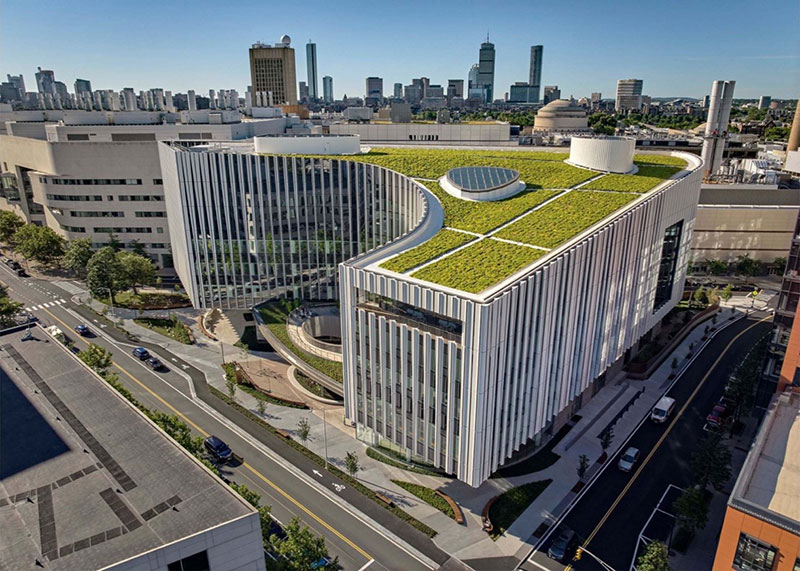
MGH launched its HIV Research Program in 1982, marking a significant step toward addressing the crisis. Now called the Ragon Institute of Mass General, MIT, and Harvard, its new headquarters is on 600 Main St. in Kendall Square, Cambridge. Photography (c) Robert Benson Photography; (c) Warren Jagger Photography.
What if the person interested in tissue donation is unable to consent?
A legally authorized representative such as a Health Care Proxy (HCP) or next of kin can consent on the donor’s behalf. Please contact us if you would like to designate someone as your Healthcare Proxy (HCP).
Will the donor’s information be kept confidential?
Yes. All personal and medical information is kept strictly confidential. HIV status is not shared with any non-medical professional (e.g., relatives) unless given permission by the donor.
Will this affect funeral arrangements or end-of-life care?
No. We work with funeral homes to ensure there are no delays or disruptions to your family’s plans.
What happens to the donated tissues?
Tissue samples are securely transported to the Ragon Institute of MIT, Harvard, and Mass General (Cambridge, MA) for analysis. All data are de-identified (cannot be traced back to the donor).
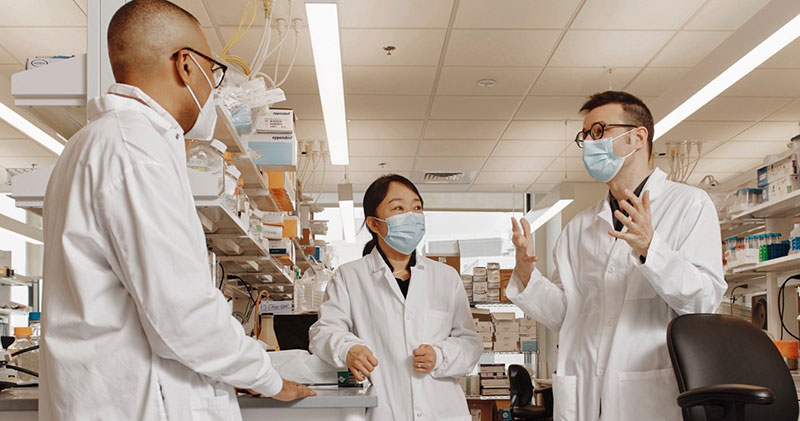
Drs. Xu Yu and Mathias Lichterfeld, BEACON PI and Co-PI, at the Ragon Institute. Photography by Julio Duffoo (Loreen Willenberg), and Tony Luong (all other photos).
I have someone I think may be interested in the study. How do I approach them about it?
Our team can provide flyers and talking points for family members, proxies, and clinicians. Our priority is always to support the wishes of the individual. Contact us at mghbeacon@mgb.org for digital/print materials or to schedule an online or in-person chat.
How can I ensure a successful donation?
- Talk with your loved ones, healthcare team, and your chosen funeral home about your interest in tissue donation.
- Complete a screening interview with our study team to determine eligibility and complete informed consent.
- If a donor is nearing end-of-life (within days-to-hours), contact us immediately (contact information above) to coordinate next steps.
- After donation, the donor’s remains will be transported to the funeral home to fulfill their final wishes.
Patient Resources
Once complete, a member of the research team will contact you by phone or email based on your preference and availability.
Thank you to the donors, caregivers, and collaborators whose contributions make this work possible. Your contributions through time, knowledge, and the profound gift of donation, advance our understanding of HIV and bring us closer to the goal of a cure.
Meet Our Team
-
![]()
- Principal & Contact Investigator, Neurologist
-
![]()
- Principal Investigator, Immunologist
-
![]()
- Co-Investigator, Infectious Disease Physician
-
![]()
- Co-Investigator, Neuropathologist
-
![]()
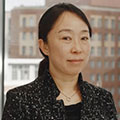
Sun Weiwei, PhD
- Research Scientist
-
![]()
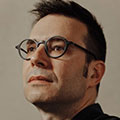
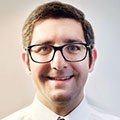
Malachi Keo, BA
- Clinical Research Coordinator