
NewsFeb | 18 | 2026
New Study Pinpoints Toxic Proteins as Primary Drivers of ALS and FTD

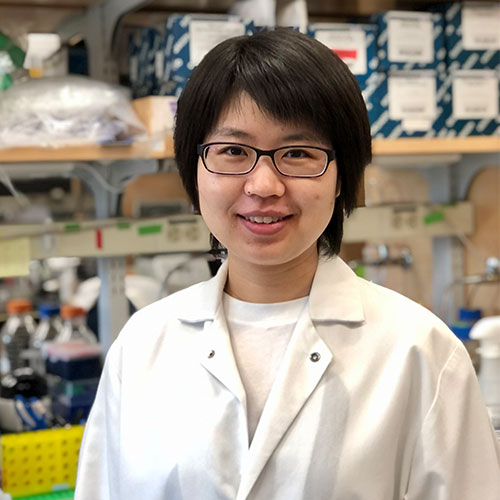
Emerging research from the Clotilde Lagier-Tourenne Lab, in collaboration with Franck Martin's Lab at the University of Strasbourg, is shedding new light on how genetic mutations in the C9ORF72 gene cause ALS and frontotemporal dementia (FTD). Xin Jiang, PhD, was the lead investigator on the study just published in the journal Science this month.
The study’s central findings involved exploration of the long-debated question: Which causes nerve damage in C9ORF72-associated ALS and FTD - dipeptide repeat proteins (DPR) or repeat RNAs? Is protein toxicity causing damage, or RNA toxicity? In this experiment, Dr. Jiang used a gene-editing technology called CRISPR to make a tiny change in the genetic code. This disabled the “start button” that tells the cell to build the toxic proteins (DPRs), but researchers left the rest of the blueprint untouched.
Dr. Jiang explains that this edit stopped the production of DPRs. “We selectively blocked the toxic protein while leaving the repeat RNAs, and we analyzed the disease progression in different laboratory models, including mouse and cellular models.”

Once the cells were no longer building DPRs, the research team could distinguish RNA effects from protein-driven effects. This distinction had been previously difficult to resolve. Clotilde Lagier-Tourenne MD, PhD, says, “C9ORF72 disease is complex because the inherited mutation results in several abnormal products that may damage brain cells. Determining if these abnormal products contribute to disease is crucial for the development of effective therapies because researchers need to know what to target. We made the unexpected observation that repeat RNAs alone did not trigger neurodegeneration. Instead, toxic proteins called DPRs were found to be major contributors to disease, and blocking their synthesis prevented disease progression in mice.”
This cutting-edge discovery provides a road map to develop new drugs for C9ORF72 ALS and FTD. Scientists can pursue therapies aimed at "turning off" the production of these specific toxic proteins to stop the neurodegeneration.
Dr. Jiang says these findings provide answers and bring hope. “It is a very challenging disease, and we are really excited that our study gave an answer to a long-standing question, and hopeful that it will help designing new therapeutic strategies.”